That’s awesome! I’d love to see that. I did have an encounter with a Humpback Whale last summer. It was almost as close. This was the clearest picture sadly.
TellsHalfStories on
“TF you looking at?!”
ILoveMyMKS on
That would freak me out. I would wake up out of my sleep screaming. That’s a death stare.
Sea-Cryptographer838 on
How do they sèa anything
Less-Load-8856 on
The desire to boop is immeasurable.
Worth_Employer_171 on
I’d never thought about how big orcas were. This guy looks huge
Agreeable_Register_4 on
You can sense the intelligence.
SkinEmbarrassed7129 on
not surprised the Orca has batshit crazy , serial killer eyes
Commercial-East4069 on
They must have really limited vision.
whattodo4klondikebar on

Eye see you…
Benji_57 on
Looks old too! Bet that orca has some stories!
kurtfire68 on
Is it me or did it feel like that Orca was trying to tell me something about my cars extended warranty
Darnocsonif on
These terrify me
Sensitive_Pudding599 on
He just said you are lucky I don’t hunt humans.
McRedditz on
“You are next.”
vapemyashes on
Bad motherfucker
Delde116 on
The Council is deciding whether to spare your life or not, please be patient.
Simbuk on
Looks hungover
cathouse on
Incorrect! The eye is actually the huge white spot on each side!! 🤓
mwilkens on
Hey bub. – Whale
BaconISgoodSOGOOD on
Judgmental orca.
MiserableSun9142 on
Is it just me or does it look off, like the eye is way too small for that big of a creature? Is that the size of all orca’s eyes or is this one just weird??
HoneySilka on
just saying Hi
VanbyRiveronbucket on
Orca got some side-eye.
Charming-Awareness79 on
They’re one of those animals where you look into their eyes and you appreciate that “someone’s home”. They’re not just the product of instinct and self preservation, it’s like they’re the masters of their world which we only get glimpses of.
AmbivalentFanatic on
Looks like kind of a dick tbh
SurayaThrowaway12 on
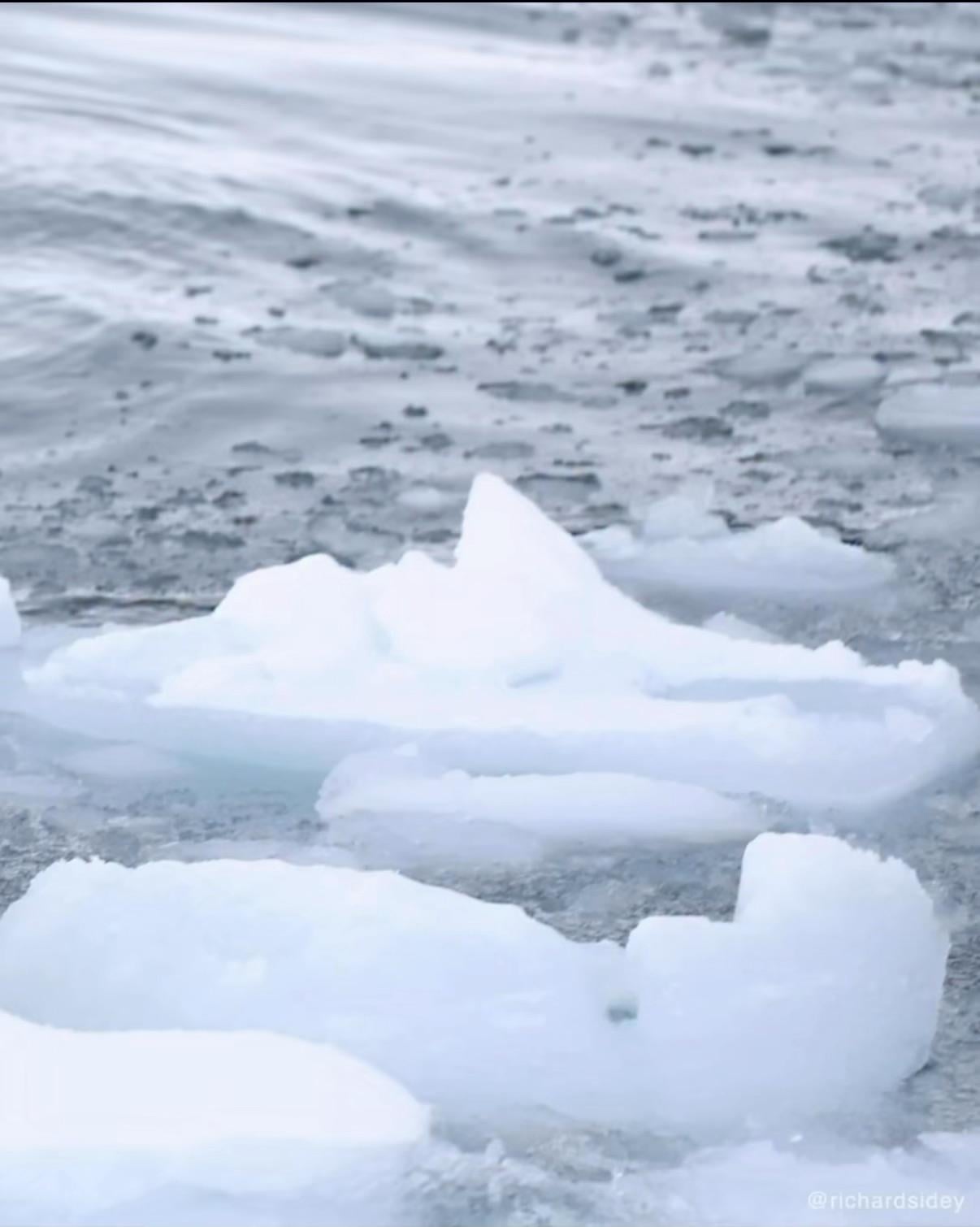
These are of course the Type B1 “Pack Ice” Antarctic orcas which use their famous wave-washing technique to wash seals off of ice floes.
Type B1 orcas are known to spyhop when looking for seals hauled out on ice floes. Like orcas in many other populations, these orcas can also sometimes be very curious about humans and boats. Though they hunt mammals, these orcas can be very selective in their diets, even in regards to different seal species. At least some pods of these type B1 orcas have shown a [strong preference for hunting Weddell seals over other seal species, such as crabeater seals and leopard seals](https://digitalcommons.unl.edu/cgi/viewcontent.cgi?article=1305&context=usdeptcommercepub). Crabeater seals and leopard seals are much more “snappy” than Weddell seals, and Weddell seals also often provide a more substantial meal to these orcas. Even though fur seals are fairly abundant there, these orcas have not been observed preying on them (perhaps at least partially due to fur seals having less blubber and more fur for insulation, making them significantly less appealing).
Original video was filmed by wildlife photographer and filmmaker Richard Sidey via EYOS Expeditions. He provides the following account of his encounter:
> While out filming wildlife in the brash ice, a pod of Type B1 Killer Whales investigated our zodiac for just over a minute, allowing us to lock eyes with this magnificent apex predator. An incredible experience.

45 Comments
Eye to Orca ratio is off the charts!
It looks like the Orca is eyeballing on porpoise..
Dudes not playin
She has a judgemental look lol
That was a lot more terrifying than I expected
Well that was unsettling
SUPER JUDGY

Why does he look so disappointed in me?
Givin you that on the side eye
I feel like, collectively, we don’t appreciate enough that Orcas choose to not eat us for some reason
He looks pissed
https://preview.redd.it/pyelu7hrvwmg1.jpeg?width=3520&format=pjpg&auto=webp&s=4b37d7916e3d035bdccc88f3f5ce4f0b2f2a9799
That’s awesome! I’d love to see that. I did have an encounter with a Humpback Whale last summer. It was almost as close. This was the clearest picture sadly.
“TF you looking at?!”
That would freak me out. I would wake up out of my sleep screaming. That’s a death stare.
How do they sèa anything
The desire to boop is immeasurable.
I’d never thought about how big orcas were. This guy looks huge
You can sense the intelligence.
not surprised the Orca has batshit crazy , serial killer eyes
They must have really limited vision.

Eye see you…
Looks old too! Bet that orca has some stories!
Is it me or did it feel like that Orca was trying to tell me something about my cars extended warranty
These terrify me
He just said you are lucky I don’t hunt humans.
“You are next.”
Bad motherfucker
The Council is deciding whether to spare your life or not, please be patient.
Looks hungover
Incorrect! The eye is actually the huge white spot on each side!! 🤓
Hey bub. – Whale
Judgmental orca.
Is it just me or does it look off, like the eye is way too small for that big of a creature? Is that the size of all orca’s eyes or is this one just weird??
just saying Hi
Orca got some side-eye.
They’re one of those animals where you look into their eyes and you appreciate that “someone’s home”. They’re not just the product of instinct and self preservation, it’s like they’re the masters of their world which we only get glimpses of.
Looks like kind of a dick tbh
These are of course the Type B1 “Pack Ice” Antarctic orcas which use their famous wave-washing technique to wash seals off of ice floes.
Type B1 orcas are known to spyhop when looking for seals hauled out on ice floes. Like orcas in many other populations, these orcas can also sometimes be very curious about humans and boats. Though they hunt mammals, these orcas can be very selective in their diets, even in regards to different seal species. At least some pods of these type B1 orcas have shown a [strong preference for hunting Weddell seals over other seal species, such as crabeater seals and leopard seals](https://digitalcommons.unl.edu/cgi/viewcontent.cgi?article=1305&context=usdeptcommercepub). Crabeater seals and leopard seals are much more “snappy” than Weddell seals, and Weddell seals also often provide a more substantial meal to these orcas. Even though fur seals are fairly abundant there, these orcas have not been observed preying on them (perhaps at least partially due to fur seals having less blubber and more fur for insulation, making them significantly less appealing).
Sadly, there are less than 100 type B1 orcas left in the Antarctic Peninsula, and due to rapid warming and the loss of pack ice, their population is [declining at a rate of about 5% each year](https://www.sealifer3.org/news/on-thin-ice-new-publications-highlight-the-impact-of-rapid-warming-on-killer-whale-populations-in-the-antarctica). It is likely that these orcas have been forced to move further south due to not finding enough seals on the remaining pack ice in the Antarctic Peninsula.
Original video was filmed by wildlife photographer and filmmaker Richard Sidey via EYOS Expeditions. He provides the following account of his encounter:
> While out filming wildlife in the brash ice, a pod of Type B1 Killer Whales investigated our zodiac for just over a minute, allowing us to lock eyes with this magnificent apex predator. An incredible experience.
That’s a disturbingly small eye!
https://preview.redd.it/ct4029ql5xmg1.jpeg?width=1097&format=pjpg&auto=webp&s=ba5d0104a6b7aca3521b30b231da53285f272a81
“Did you wash your ass today” ahh orca 💔💔
https://preview.redd.it/qg6p8n35axmg1.png?width=671&format=png&auto=webp&s=6fbfa87cd5b40ddbbcdee8be3c22375ec96bc3ee
He giving the stink eye
You have just been visited by the orca of judgement.